
In July 2023, members of Niger’s Presidential Guard detained the country’s democratically elected president, Mohamed Bazoum. The Guard commander, General Abdourahamane Tchiani, would later declare himself the leader of the new military government, which is interestingly called the National Council for the Safeguarding of the Homeland. Unsurprisingly, the junta justified the coup by citing worsening insecurity and poor governance under the administration of Bazoum.
Nigeriens trooped to the streets to celebrate the coup. Africans at home and abroad joined in the excitement. Beyond seeing the junta as the solution to the problems of insecurity and poor governance, many also saw the military government as necessary to liberate the people of Niger from French imperial interests. Niger, we know, is rich in uranium. But it remains one of the poorest countries in the world. It is widely believed that France exerted enormous influence over the economy and politics of Niger. The deposed president, Bazoum, was in fact seen as a French stooge. So a junta that presents itself as hostile to French and Western interests doesn’t need to do much to win popular support.
It helps to contextualise the Niger coup within the seeming contagion of coups spreading across Francophone African countries. Mali had already experienced two coups, in 2020 and 2021. Guinea also had a coup in 2021. Burkina Faso had two coups in 2022, and of course Captain Ibrahim Traore has remained the country’s leader ever since. So when the Niger coup happened in 2023, many people saw it as the continuation of a Pan-African revolution.
After he assumed office, General Tchiani rejected ECOWAS’s demand to reinstate President Bazoum. He allied with Mali and Burkina Faso, a relationship that ultimately culminated in the formation of the Alliance of Sahel States, an alternative to ECOWAS. Tchiani adopted a strong anti-French foreign policy. He ordered the French ambassador to leave and also ordered the withdrawal of French troops stationed in Niger.
As part of efforts to gain greater state control over strategic resources, the junta in 2024 revoked the French company Orano’s permit to develop one of the largest uranium deposits in the country. In 2025, the junta nationalised SOMAIR, the country’s main uranium mine. Before the nationalisation, Orano had held a majority stake in SOMAIR. Gaining greater control of the country’s uranium through nationalisation is in line with the expectations many had regarding the liberation of Niger from France.
This reminds me of a concept called resource nationalism. It is the policy whereby a government seeks to increase control over the extraction, ownership, or taxation of a country’s natural resources, which is usually at odds with the interests of multinationals. Resource nationalism forms a significant part of the Pan-African discourse, as it is believed that for Africa to be truly liberated, our governments must control our prized resources.
However, resource nationalism is not often as easy as many think, and Niger serves as a cautionary tale. The nationalisation of SOMAIR happened in November 2025. But by February, Niger made a volte-face. Tchiani announced he was prepared to return 63% of more than 156,000 tonnes of the expropriated uranium, a figure that corresponds almost exactly to Orano’s former stake in the mine. Since the nationalisation, Niger has had trouble finding buyers for its uranium on the international market. Orano’s initiation of multiple arbitration proceedings to contest the nationalisation may have contributed to the difficulty Niger has had in finding a willing buyer. A potential buyer was Iran, but that option no longer seems feasible, at least for now, owing to the recent conflict with the US.
Acknowledging that resource nationalism is not as simple as often portrayed should not be interpreted as an excuse for African governments to allow themselves to be ridden roughshod by multinationals. The point is that investments in mineral extraction, exploration, and refining are usually cost-intensive, and because many African countries lack capital, they have to rely on foreign multinationals to invest in their mineral sectors. That’s why African governments try to woo foreign investors. But if a multinational took the risk of investing in building and developing mines, it seems a little unfair for the government to wake up one morning and nationalise those mines. That is akin to the House Sparrow, a bird known for occupying nests built by others. This nefarious practice is called nest usurpation. So, in a sense, nationalisation is investment usurpation.
Indigenisation is another way resource nationalism manifests. The idea is to expropriate businesses from wealthy foreigners, who are usually minorities, and hand over their investments to indigenes. Market-dominant minorities, according to Amy Chua, often attract envy from the poorer majority. This sentiment is fuelling the latest frenzy of xenophobic attacks in South Africa. African immigrants who own successful businesses in the informal sector are being chased out by marauding protesters. Ghanaians have protested in recent years what they see as the dominance of Nigerians in the Ghanaian economy, though they have not taken the path of violence like their South African counterparts.
The policy of indigenisation is usually championed by the government, not placard-brandishing protesters. Idi Amin’s Economic War of the 1970s seized foreign-owned businesses in sectors like manufacturing, agriculture, banking, real estate and handed them over to black Ugandans. Approximately 50,000 to 80,000 mostly Asian foreigners targeted in this indigenisation policy were given 90 days to leave the country. The consequence was predictably disastrous. Because these Black Ugandans lacked the skill and experience required to manage these businesses, the Ugandan economy collapsed. Similar policies were implemented in varying degrees by Robert Mugabe in Zimbabwe, Kenneth Kaunda in Zambia, and Julius Nyerere in Tanzania.
Resource nationalism may satisfy patriotic sentiments, but it is never sufficient in and of itself. It takes considerable talent and managerial skill to operate in highly technical and advanced industries. There is a reason multinationals are successful. Governments, on the other hand, are not optimised for efficiency. When the state assumes direct control, the most likely outcome is that the industry collapses. Likewise, transferring assets and investments from foreigners to indigenes also does not, in itself, guarantee success, though it may give the illusion of nationalist pride. Economies don’t grow on mere sentiments but through pragmatism.
That is not to excuse the often shady and predatory conduct of some multinationals. We should be objective about the risks that come with resource nationalism while remaining clear-eyed about the abuses that foreign investors have sometimes perpetrated. We live in a globalised economy, and as long as investors are willing to play by the rules, their nationality should not matter when deciding whether they are allowed to do business, especially where we face a shortage of capital and technical expertise.
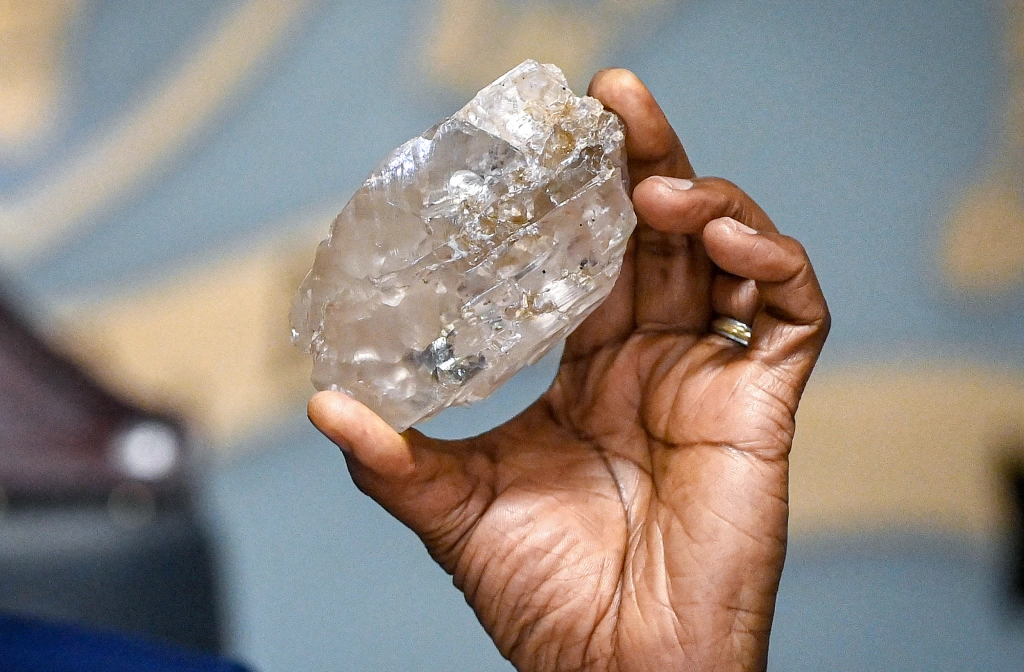
Instead of seizing the mines, Botswana offers a more pragmatic model for Niger. Consider its long-standing partnership with De Beers, the world’s largest diamond company. Rather than nationalising the industry, the Botswana government negotiated an equity stake in De Beers, which has since risen to 15%. By choosing partnership over expropriation, Botswana was able to develop into one of Africa’s most successful resource economies. Had it taken the path of indiscriminate resource nationalism, it is unlikely the country would have become the success story it is today.
Some ideas sound great on paper, no matter how well-intentioned, but in practice they don’t often turn out so well.