
Next year, 10 African countries will head to the polls to elect new leaders. As is characteristic of campaign seasons, we can expect in the coming months to begin to hear political jingles play on radio, TV, and as annoying, intrusive ads on YouTube. Campaign flyers will start to deface public buildings and infrastructure, while billboards and newspapers will be saturated with political advertisements. The prospects of each contestant will form the topic of discussion at the bar and at dinner with friends and family. People will take sides and evaluate each candidate based on their chosen criteria.
Oftentimes, when we criticise the way electioneering is done in Africa, we come from the angle of how political parties have mastered the trick of mobilising voters by sharing cash and food items. While this is true, we hardly talk about the role oratory plays in enchanting voters, especially the educated. Campaign speeches and debate performances tend to rank high in the criteria used by the educated electorate.
There are psychological reasons why oratory is an effective tool for mobilising people into a movement or ideology. The ability to whip up emotions in the hearts of people is a skill not very many people possess. At the heart of politics is tribalism, and a skilled orator can appeal to those basal instincts by demonising other groups. For instance, a socialist-leaning politician can portray billionaires as inherently evil. Also, oratory gives a politician the ability to speak in platitudes or make grandiose promises. But vague assurances of a better future are often easier to sell than the difficult trade-offs involved in achieving one.
Cicero wrote more than 2,000 years ago about how the skill of oratory and persuasion makes a great Roman statesman. And 2,000 years later, that skill is as important as ever. In fact, in literature, flowery language is often associated with royalty. We can see this in the works of Shakespeare and even in ancient texts like Homeric epics. It couldn’t be any clearer that leaders are expected to be great communicators.
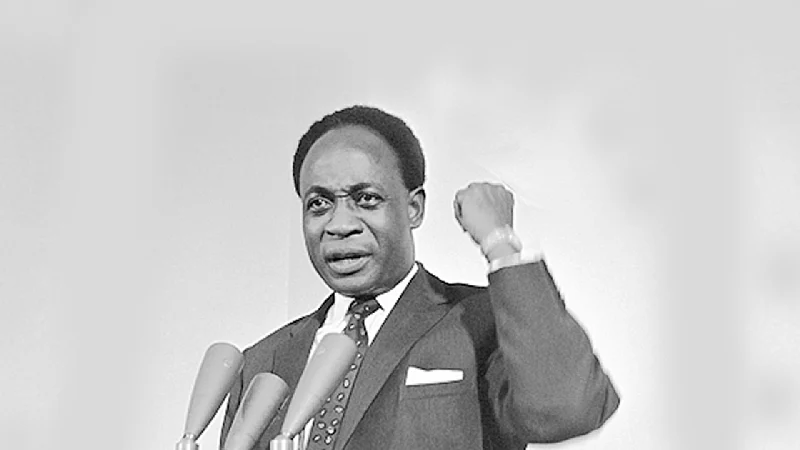
But this expectation is a flawed one, especially if we make it the most important skill a leader must possess. This is the argument made by Remy Rowe in an article titled The Silver Tongue Fallacy. The writer uses Kwame Nkrumah as an example of a leader who is skilled at oratory but unskilled at leadership. Nkrumah led Ghana into independence in 1957. He was a consummate revolutionary, gifted orator, and Pan-African ideologue. The writer recalls how Nkrumah travelled around the world to resolve conflicts and how he spoke stirringly on international platforms. But his image abroad contradicted his record at home. At independence, Ghana was the “model colony” of the British Empire. It was the richest and most educated territory in sub-Saharan Africa, the writer says. But due to Nkrumah’s lack of expertise in governance, he collapsed the economy of Ghana. This is despite the fact that he hired Sir Arthur Lewis, the only Black man to have won the Nobel Prize in Economics, as his chief economic adviser. Both of them eventually fell out over disagreements on how to pursue economic independence and industrialisation.
In a video essay, I explained how Nkrumah discovered Marxism and Leninism as an undergraduate in the US. This informed his policies as the president of Ghana. He pursued central planning and built state-owned enterprises. Unsurprisingly, it all failed. The economy was so bad that he was, in fact, overthrown in a coup in 1966. Nkrumah had the credentials of a revolutionary but lacked those of a leader. And he wasn’t the only one. His generation of African freedom fighters were products of an era of anti-Western revolutionary frenzy. They needed to be eloquent, charismatic, and ideological. They gave us independence, often at great cost to their safety and freedoms. But what it takes to secure independence may not necessarily translate into expertise in leading a country.
President William Ruto of Kenya is a modern example of a charismatic and gifted speaker. He was loved by large swathes of Kenyan youth. But less than two years into his administration, Kenyans began to stage large-scale protests against what they viewed as his crippling economic policies. He became a villain overnight. His charisma had become irrelevant.
A gifted speaker can sell you dangerous ideas. They can dress up their ignorance in platitudes. And unfortunately, much of politics is oratorical theatre where the best actor wins. While politics rewards oratory and persuasion, nation-building demands complex trade-offs. Africa is not suffering from a dearth of politicians. What we need more than ever are leaders willing to do the dirty, laborious job of nation-building.
In an article titled Against Solutions, Tobi Lawson argues that we should resist the urge to immediately demand solutions from our politicians without first demanding a good understanding of what the problems are. A poor understanding of the problems will lead to poor solutions. That’s a no-brainer. Unfortunately, modern political theatre allows gifted orators to fool the electorate by proposing shallow solutions.
I believe Africa is on borrowed time. We don’t have the luxury of treating elections as business as usual. If politicians know that all it takes to win is to “buy” our votes or enchant us with rhetoric, then they will do exactly that. We should begin to demand reason over rhetoric, competence over charisma, objectivity over oratory, evidence over emotion, and precision over platitudes. Otherwise, we would keep falling prey to gifted charlatans who exploit our instincts by selling us utopian ideas.